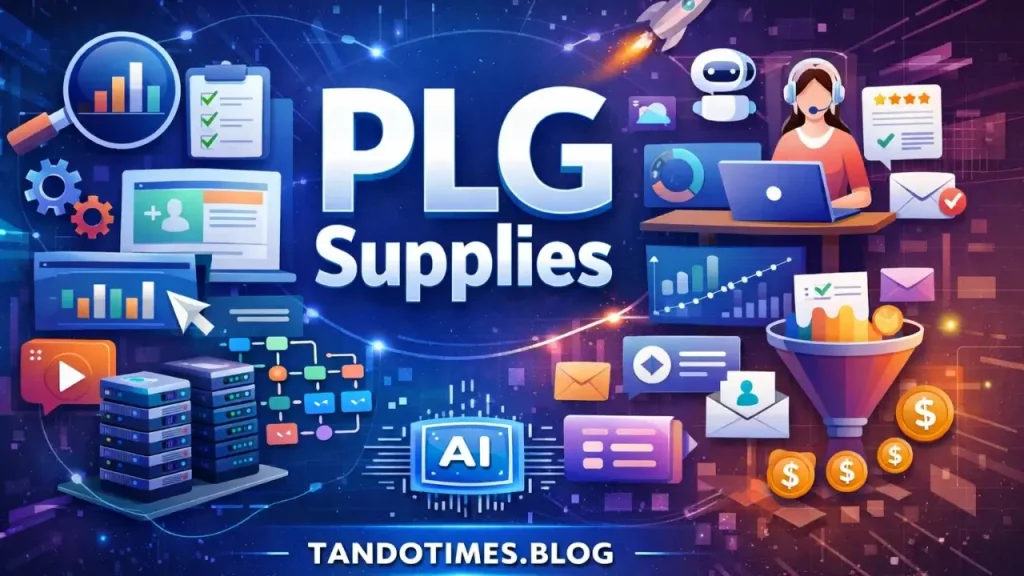
Product-led growth has changed how modern software companies scale. Instead of relying heavily on sales teams or large marketing budgets, growth now comes directly from the product experience. At the center of this shift sits a critical concept known as PLG supplies. These supplies include the tools, systems, data, and processes that allow a product to guide users from first touch to long-term loyalty. Understanding these supplies helps you design products that grow themselves through value, usability, and trust.
This article explores PLG supplies in depth. You will learn what PLG means, how it work, why they matter, and how different teams use them. You will also discover best practices, future trends, and common mistakes to avoid. By the end, you will have a complete framework for building and managing it that support sustainable growth.
What Does PLG Mean?
PLG stands for product-led growth. It is a business strategy where the product itself becomes the main driver of customer acquisition, activation, expansion, and retention. In a PLG model, users experience value before they speak to sales or commit to long-term contracts. The product is designed to educate, convert, and retain users through intuitive design, helpful feedback, and continuous value delivery.
Unlike traditional growth models, PLG focuses on user experience as the core growth engine. Every interaction inside the product influences whether a user adopts features, upgrades plans, or recommends the product to others. This makes internal alignment, data accuracy, and tooling essential. PLG does not remove marketing or sales, but it changes their role to support the product journey rather than control it.
What Are PLG Supplies?
PLG supplies are the collection of tools, platforms, data systems, workflows, and operational assets that enable product-led growth. They support every stage of the user lifecycle, from first interaction to long-term engagement. These tools help teams understand user behavior, guide onboarding, personalize experiences, and automate growth actions at scale.
These supplies are not limited to software tools. They also include internal processes, data models, dashboards, playbooks, and feedback loops. Together, they form the infrastructure that allows a product to learn from users and respond intelligently. Without the right supplies, even a well-designed product struggles to scale efficiently.
Why PLG Supplies Matter?
These tools matter because they turn product usage into actionable growth signals. They help teams understand what users need, where they struggle, and what drives long-term value. With the right supplies in place, companies can reduce friction, improve adoption, and scale without adding unnecessary complexity.
1. Better Onboarding = Faster Activation
Onboarding is the first critical moment in a PLG journey. It enable guided onboarding experiences that adapt to user behavior and goals. These systems help new users reach value quickly by showing the right features at the right time. Faster activation increases retention and reduces churn during the early lifecycle stage.
Effective onboarding tools also collect behavioral data. This data reveals where users drop off, which steps cause confusion, and what actions lead to success. Teams can continuously refine onboarding flows using these insights.
2. Accurate Data for Smarter Decisions
Data is the backbone of product-led growth. These supplies include analytics platforms that track user actions, feature usage, and engagement patterns. This data allows teams to make decisions based on real behavior rather than assumptions.
Accurate data supports experimentation and optimization. Teams can test pricing models, feature releases, and in-product messaging with confidence. When data is clean and accessible, growth becomes predictable and repeatable.
3. Personalized User Experiences
Modern users expect products to adapt to their needs. It make personalization possible by connecting user data with product experiences. These systems enable targeted messaging, feature recommendations, and contextual guidance based on user behavior.
Personalization increases engagement and perceived value. When users feel understood, they are more likely to explore advanced features and remain loyal. It help deliver this experience at scale without manual effort.
4. Scalable Support
Product-led companies rely on scalable support systems that empower users to help themselves. It include knowledge bases, in-app support widgets, and automation tools that reduce reliance on human agents. These systems provide instant assistance while collecting feedback for improvement.
Scalable support improves satisfaction and lowers operational costs. It also feeds valuable insights back into product development. When support data is integrated with product analytics, teams can address root causes instead of symptoms.
Types of PLG Supplies and Tools
It cover a wide range of functions across the user lifecycle. Each category plays a specific role in supporting growth through the product.
1. User Onboarding & Engagement
Onboarding and engagement supplies help users understand the product and stay active. These tools provide in-app walkthroughs, tooltips, checklists, and contextual prompts. Their goal is to guide users toward meaningful actions that demonstrate value.
Engagement supplies also track user progress and trigger messages based on behavior. They ensure users never feel lost or overwhelmed. Over time, these systems help build habits that lead to long-term retention.
2. Product Analytics
Product analytics supplies capture and analyze user behavior inside the product. They track events such as feature usage, session frequency, and conversion milestones. This data helps teams understand how users interact with the product in real time.
Advanced analytics tools support segmentation and cohort analysis. Teams can identify power users, churn risks, and expansion opportunities. These insights guide roadmap decisions and growth experiments.
3. Customer Support Tools
Customer support supplies include ticketing systems, live chat, chatbots, and self-service portals. In a PLG model, support is embedded directly into the product experience. Users can access help without leaving the interface.
These tools also collect qualitative feedback. Support conversations reveal pain points, feature requests, and usability issues. When integrated with product data, support insights become a powerful growth input.
4. Feedback and Voice of Customer
Feedback supplies capture user opinions through surveys, ratings, and feedback widgets. They help teams understand why users behave the way they do. Voice of customer data complements behavioral analytics by adding context and emotion.
Effective feedback systems close the loop by informing users when their input leads to improvements. This builds trust and encourages ongoing engagement. Feedback supplies are essential for continuous product improvement.
5. Growth Automation
Growth automation supplies connect data, messaging, and actions into scalable workflows. They trigger emails, in-app messages, and feature unlocks based on user behavior. Automation ensures consistent experiences across thousands or millions of users.
These systems also support experimentation. Teams can test different growth tactics without manual intervention. Automation turns insights into action at speed.
Building a PLG Stack: How to Choose the Right Supplies
Choosing the right PLG supplies requires strategic thinking. A well-designed stack supports growth without creating complexity or data silos.
Alignment With Your Growth Stage
Early-stage companies need simple, flexible tools that support rapid iteration. Mature organizations require scalable systems that handle large user bases and complex data. These supplies should match your current growth stage while allowing room to expand.
Overinvesting too early can slow progress. Underinvesting later can limit growth. Regularly review your stack to ensure alignment with business goals.
Integration Capabilities
These supplies must work together seamlessly. Integration ensures data flows smoothly between systems, creating a unified view of the user. Poor integration leads to fragmented insights and inconsistent experiences.
Look for tools with strong APIs and native integrations. A connected stack reduces manual work and improves decision-making.
Ease of Use
Complex tools slow adoption and reduce effectiveness. These tools should be intuitive for both users and internal teams. Ease of use accelerates experimentation and reduces training costs.
User-friendly tools also encourage cross-functional collaboration. When teams can access and understand data easily, growth becomes a shared responsibility.
Pricing Flexibility
These supplies should scale with usage rather than fixed costs. Flexible pricing models align expenses with growth. This is especially important for startups and fast-growing companies.
Evaluate pricing based on long-term value rather than short-term savings. The right tools pay for themselves through improved retention and expansion.
PLG Supplies for Different Teams
It supports multiple teams across the organization. Each team uses these tools differently but contributes to the same growth goals.
Product Teams
Product teams rely on these tools to understand user behavior and prioritize features. Analytics and feedback tools guide roadmap decisions. Onboarding and engagement supplies help validate design choices.
These teams also use experimentation tools to test hypotheses. PLG supplies enable continuous improvement based on real usage data.
Marketing Teams
Marketing teams use these supplies to attract and nurture users through the product. Product data informs messaging, segmentation, and campaign timing. In-product prompts and lifecycle emails become key channels.
PLG supplies help marketing measure impact beyond clicks. They connect campaigns directly to activation and retention metrics.
Customer Success Teams
Customer success teams use these tools to monitor user health and prevent churn. Usage data highlights accounts at risk or ready for expansion. Support tools streamline communication and issue resolution.
These teams also use feedback systems to identify improvement opportunities. PLG supplies help them scale success without relying solely on high-touch interactions.
Growth Teams
Growth teams sit at the intersection of product, marketing, and data. They use PLG supplies to run experiments, analyze results, and optimize funnels. Automation tools help them deploy changes quickly. Growth teams rely on accurate data and flexible tooling. It give them the leverage to drive impact at scale.
Future Trends
PLG supplies continue to evolve as user expectations and technology change. Several trends are shaping the future of product-led growth infrastructure.
Artificial intelligence is becoming more embedded in these supplies. AI-driven insights help predict user behavior and personalize experiences in real time. Automation is becoming smarter and more adaptive.
Privacy and data governance are also gaining importance. These supplies must balance personalization with compliance and trust. Transparent data practices will become a competitive advantage.
Finally, no-code and low-code tools are lowering barriers to experimentation. Teams can build and modify PLG workflows without heavy engineering resources. This increases speed and flexibility.
Best Practices for Managing Supplies
Managing these tools requires ongoing attention and discipline. Start by defining clear ownership for each tool and system. Accountability ensures tools are maintained and used effectively. Regularly audit your stack to remove redundancy. Too many overlapping tools create confusion and dilute insights. Focus on quality and integration rather than quantity. Invest in training and documentation. Even the best tools fail without proper adoption. Encourage cross-team collaboration and shared metrics to align efforts.
Common Mistakes to Avoid
One common mistake is focusing on tools instead of outcomes. These tools should serve clear growth objectives. Avoid adopting tools without a defined use case. Another mistake is ignoring data quality. Inaccurate or incomplete data undermines trust and decision-making. Invest in clean tracking and consistent definitions. Finally, avoid siloed ownership. It work best when teams collaborate. Shared visibility and alignment are essential for success.
Final Thoughts
PLG supplies are the foundation of product-led growth. They transform user interactions into insights, actions, and scalable experiences. By investing in the right tools and processes, you enable your product to drive growth naturally and sustainably.
A strong PLG supply stack supports onboarding, personalization, analytics, support, and automation. It empowers teams to learn from users and respond quickly. When managed thoughtfully, it become a competitive advantage that compounds over time. TANDOTIMES explores the latest tech trends, gadgets, and innovations with clear, practical insights for everyday users.
Frequently Asked Questions – FAQs
What are PLG supplies in simple terms?
These are the tools and systems that help a product drive growth through user experience and data.
Are these supplies only software tools?
No, they also include processes, workflows, dashboards, and internal playbooks.
Do small startups need these supplies?
Yes, but they should start simple and scale tools as growth increases.
How do PLG supplies improve retention?
They personalize experiences, guide users, and identify churn risks early.
Can PLG supplies replace sales teams?
They reduce reliance on sales but often work alongside sales in larger organizations.